Hoi An pagodas have long become an indispensable part of the spiritual culture, attracting numerous visitors from all over who come to pay their respects and enjoy the scenery every year. The pagodas in Hoi An are not only places to pray for peace but also serve as guardians of the ancient architectural and historical values of this heritage land. If you are planning a journey to seek tranquility, discover these 10 most sacred destinations in the article below.
Explore the sacred beauty of famous pagodas in Hoi An
Iconic pagodas located in the heart of Hoi An Ancient Town
The core heritage area houses spiritual structures that are centuries old. A special feature of the Hoi An pagodas in this area is the profound architectural blend of Vietnamese, Chinese, and Japanese influences.
Japanese Covered Bridge (Chua Cau)
When mentioning Hoi An pagodas, many travelers immediately think of the Japanese Covered Bridge—the famous iconic structure that appears in almost every journey exploring the ancient town. It was built around the 17th century by the Japanese merchant community living in Hoi An at that time.
The uniqueness of the Japanese Covered Bridge lies in its architectural blend of Japanese, Chinese, and Vietnamese styles. The bridge crosses a small creek, featuring an ancient roof with intricately carved motifs. Inside, there is a small shrine dedicated to the Taoist deity Tran Vo Bac De.
Japanese Covered Bridge – an architectural and cultural icon not to be missed in Hoi An
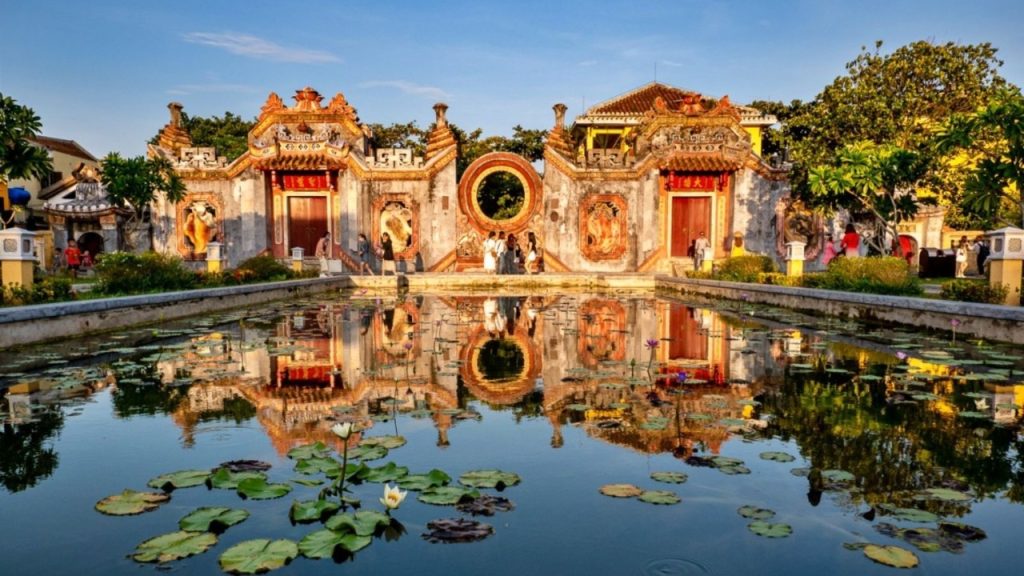
Ba Mu Pagoda (including Hai Binh Temple and Cam Ha Temple) is a Hoi An pagoda known for its extremely popular photo check-in and sightseeing space. After restoration, the three-entrance gate (Tam Quan) of this pagoda, with its sharp mossy walls and the tranquil lily pond in front, has become a must-visit destination for young people looking for nostalgic photo angles.
The ancient space at Ba Mu Pagoda attracts many visitors
Built in the 17th century by the Chinese community, Ong Pagoda is a sacred Hoi An pagoda dedicated to the talented general Quan Van Truong (Quan Cong). This structure is deeply imbued with Chinese architectural style, featuring dominant red tones, a system of large wooden columns, roofs covered with green glazed tube tiles, and splendid gold-plated horizontal lacquered boards and parallel sentences.
Distinctive Chinese architecture at Quan Cong Temple
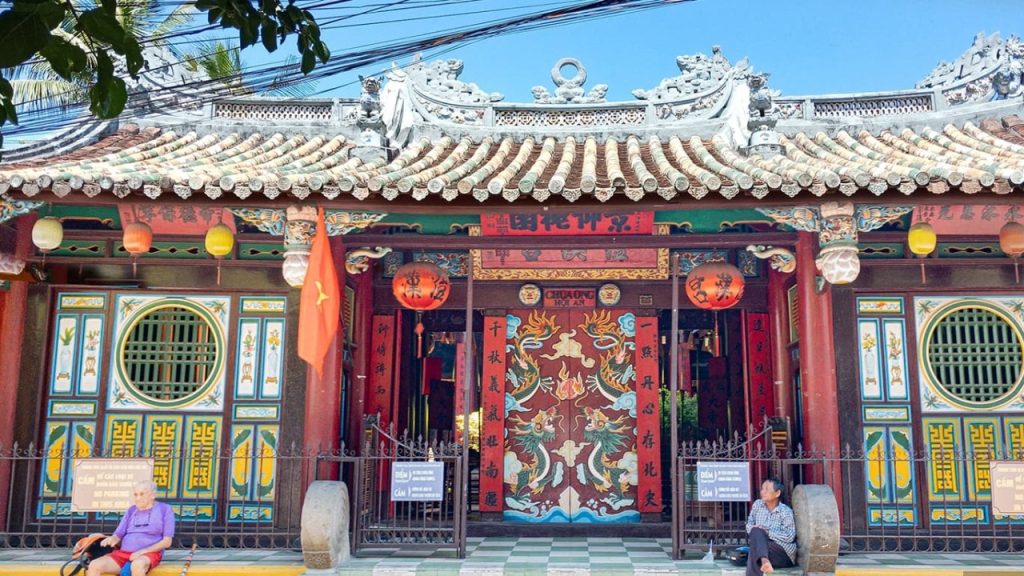
Although commonly known as an Assembly Hall, this place is also a Hoi An pagoda dedicated to Thien Hau Thanh Mau—the goddess who protects merchants from the rough seas. This Hoi An pagoda is the largest among the assembly halls, distinguished by its vibrant three-entrance gate, rockery carved into the shape of a carp turning into a dragon, and a solemn worship space shimmering with oil lamps and giant incense rings hanging from the ceiling.
Fujian Assembly Hall in Hoi An with striking red architecture
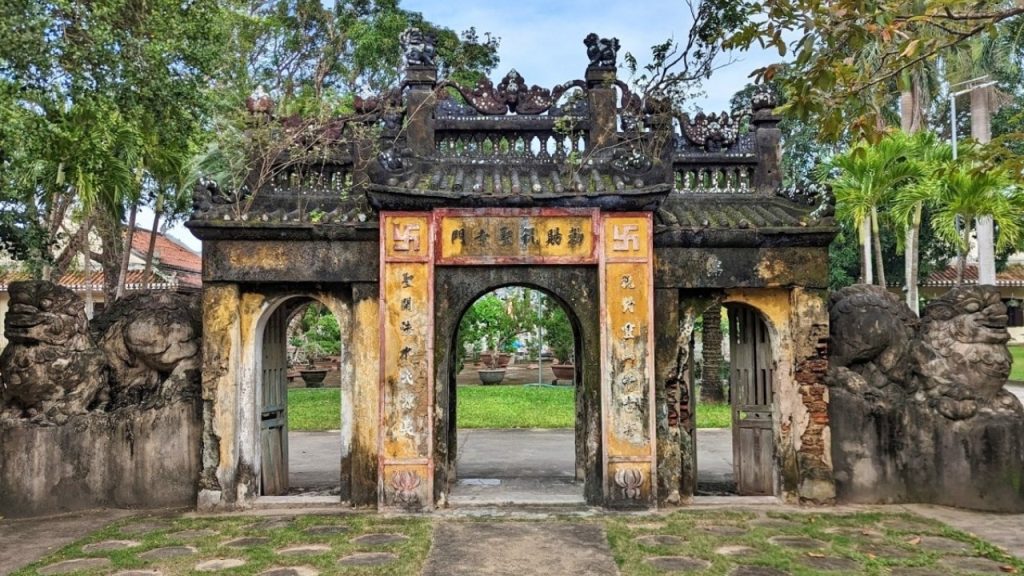
Built in 1454, Chuc Thanh Pagoda is one of the oldest pagodas in Hoi An. It belongs to the Lam Te sect and is the birthplace of the famous Chuc Thanh Zen lineage in Central Vietnam. This Hoi An pagoda features a vast space shaded by ancient trees, carrying a mossy, tranquil, and purely Vietnamese beauty with a system of ancient towers dedicated to the patriarchs.
Chuc Thanh Pagoda bears an ancient and peaceful beauty in the heart of Hoi An
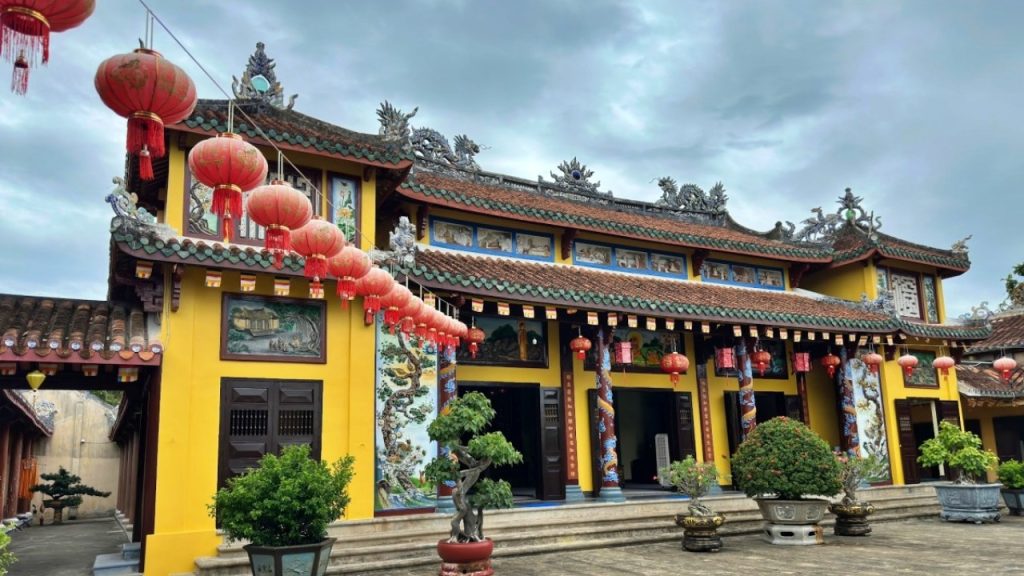
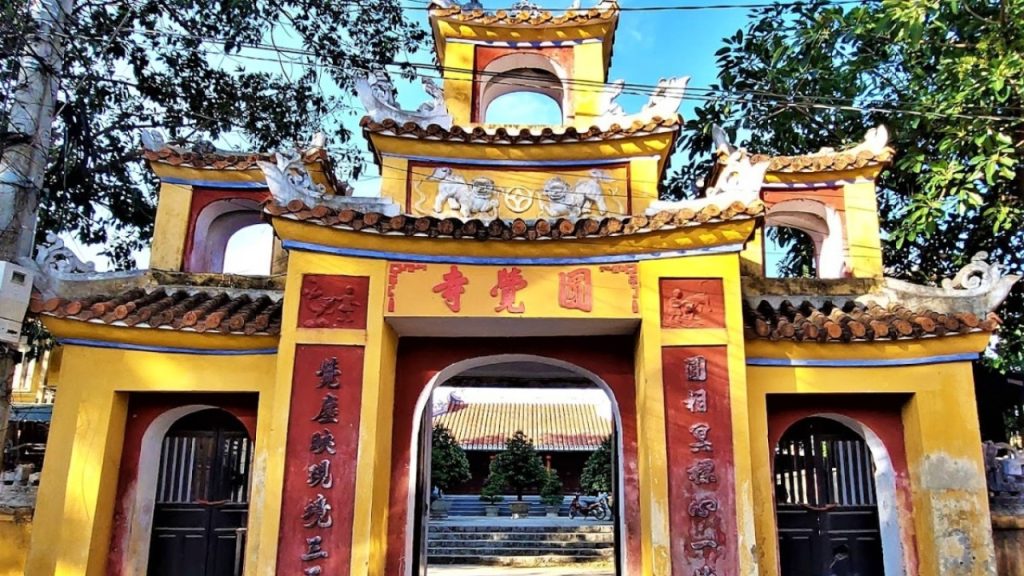
Featuring traditional "Quoc" (Nation) character-style architecture, Phuoc Lam Pagoda is a Hoi An pagoda associated with the legend of Zen master Minh Giac. The atmosphere here is extremely serene with shady temple courtyards and melodious bell sounds; it is an ideal Hoi An pagoda for those who want to let go of their worries and find inner peace.
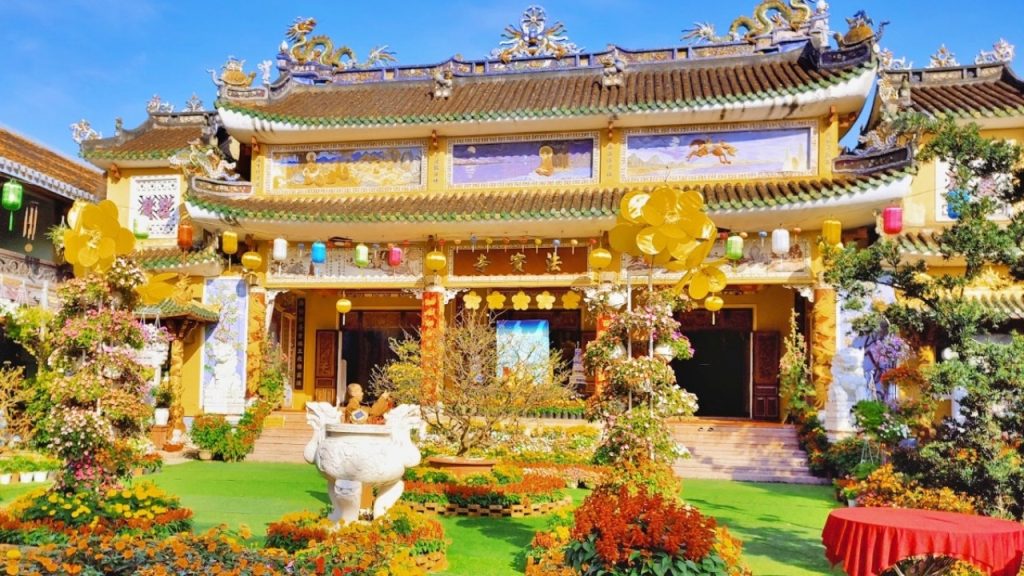
Vien Giac Pagoda is a Hoi An pagoda with a spacious area and architecture inspired by Northern Buddhism. It is frequently visited by locals to worship Buddha and participate in religious activities. The temple grounds stand out with many green trees, lotus ponds, and Buddha statues, creating a peaceful feeling. On major holidays, the pagoda often organizes Buddhist cultural activities that attract large numbers of Buddhists.
Peaceful space suitable for Buddha worship in Hoi An
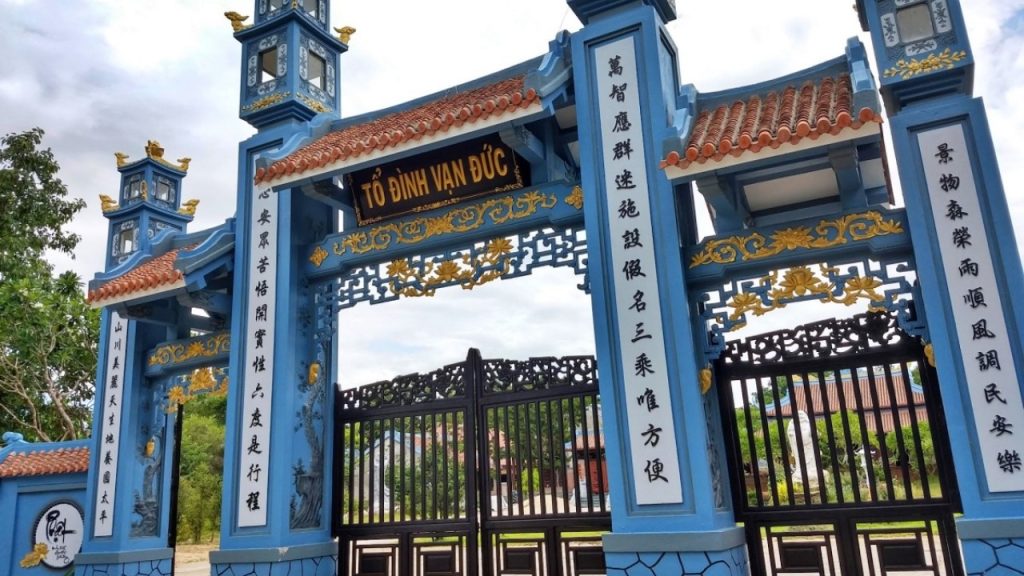
Van Duc Tu is a spiritual destination quite familiar to locals. The space here is simple, serene, and less crowded compared to locations within the old town. The pagoda impresses with its clean, beautiful campus, abundant greenery, and peaceful atmosphere. This is a suitable place to stop and relax after a journey exploring the streets for those traveling to Hoi An.
Being the largest Northern Buddhist pagoda in the city center, Phap Bao Pagoda possesses a grand, two-story architectural style that still maintains its inherent solemnity. Major Buddhist ceremonies frequently take place here, attracting a large number of monks, nuns, Buddhists, and tourists to participate and pray for peace while on a pilgrimage to the pagodas in Hoi An.
Hoi An Phap Bao Pagoda stands out with its modern architecture
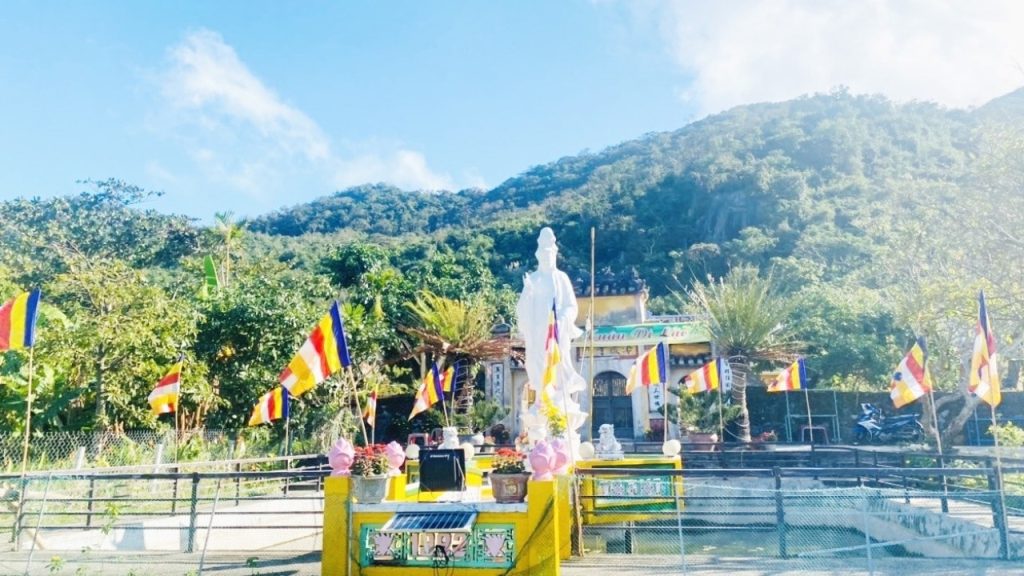
To visit this final Hoi An pagoda, travelers must head out to the Cu Lao Cham island cluster. Hai Tang Pagoda is an ancient Hoi An pagoda built in 1758 to meet the spiritual needs of fishermen and merchant ships. This Hoi An pagoda leans against the rocky mountain, facing the rice valley, possessing a unique, pristine, and ancient beauty.
Hai Tang Pagoda at Cu Lao Cham with green natural scenery
Nesta Hoi An Resort & Spa - The convenient choice for visiting pagodas in Hoi An
Enjoy a relaxing vacation at Nesta Hoi An Resort & Spa
To ensure your journey of exploring and worshiping at the Hoi An pagodas is the most complete and relaxing, choosing an ideal stop is extremely important. Nesta Hoi An Resort & Spa is proud to be the perfect place for you to stay and relax.
Nesta Hoi An Resort & Spa harmoniously combines the beauty of traditional Hoi An architecture with modern luxury and comfort, providing a peaceful resort space by the poetic river.
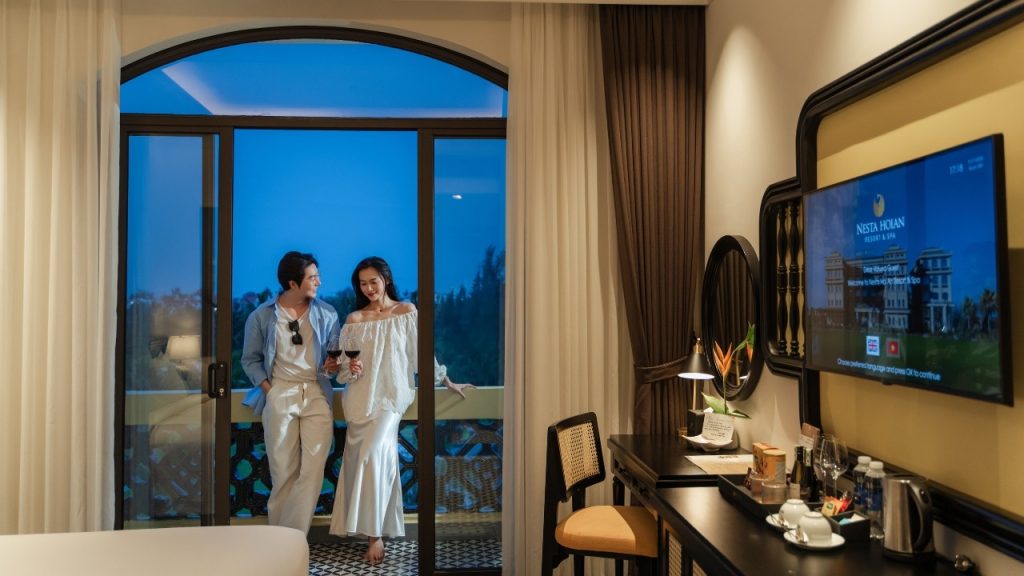
Spacious room space with a private balcony to catch natural sunlight and wind
Choosing to stay at Nesta Hoi An, your journey to sightsee at the Hoi An pagodas will become easier than ever thanks to outstanding services and privileges:
Prime location: Situated in a quiet and airy area, making it easy for you to move to Hoi An pagodas located both inside and outside the old town fringe.
Free Shuttle Bus: Nesta Hoi An provides a periodic shuttle bus service to take guests to Hoi An Ancient Town. You can leisurely walk to visit the Japanese Covered Bridge, Ba Mu Pagoda, Ong Pagoda, and Fujian Assembly Hall without worrying about transportation or road conditions.
Itinerary design support: The locally knowledgeable reception team is always ready to advise and help guests easily visit other pagodas near the old town such as Chuc Thanh Pagoda and Phuoc Lam Pagoda using the most convenient means.
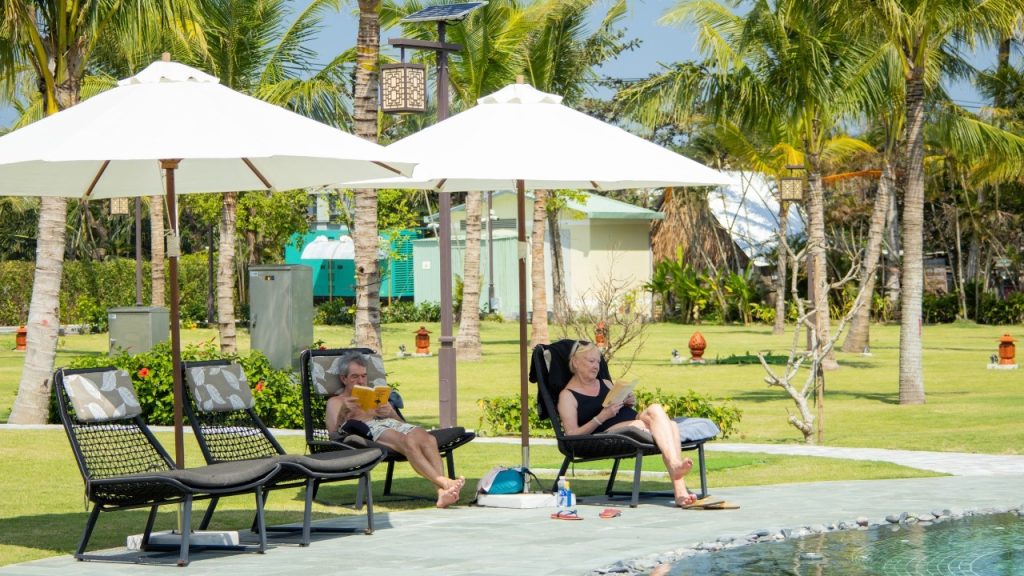
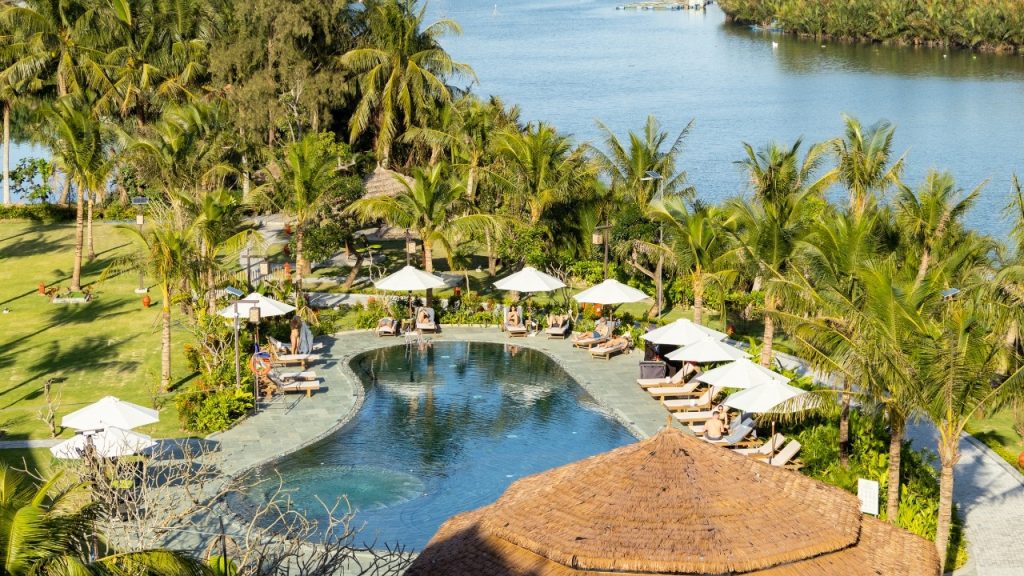
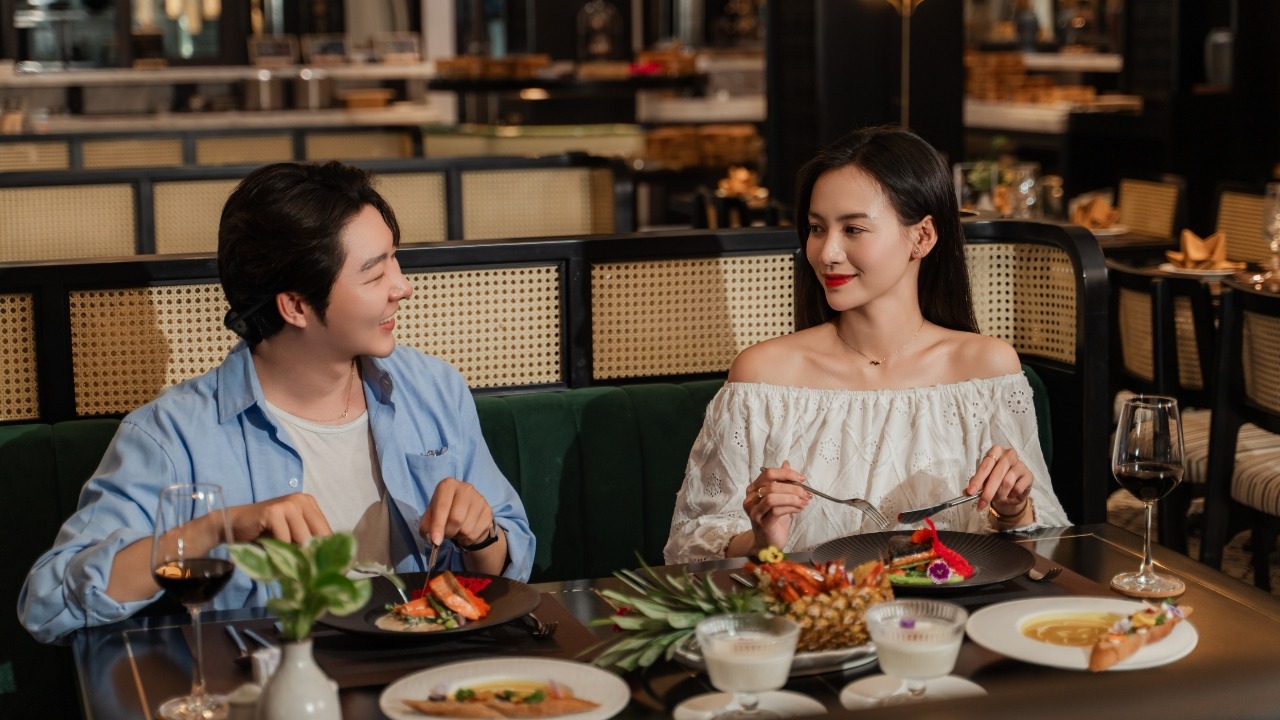
World-class resort amenities: After a long day of walking to visit Hoi An pagodas, you can immerse yourself in the cool water of the infinity outdoor pool, experience relaxing massage treatments at the high-end Spa, or enjoy excellent cuisine at the resort's restaurant.
Relax at the peaceful riverside swimming pool amidst green space
BOOKING information:
Address: 87 Cua Dai, Hoi An Dong Ward, Da Nang City
Frequently Asked Questions when visiting pagodas in Hoi An (FAQ)
Experience visiting pagodas in Hoi An
Does visiting pagodas in Hoi An require an entrance ticket?
Many pagodas in Hoi An are open for free to visitors and those worshiping Buddha. However, some locations within the old town may be part of the sightseeing route that uses the Hoi An Ancient Town ticket according to local regulations.
What is the best time to visit Hoi An pagodas?
The best time to visit Hoi An pagodas is usually early morning or late afternoon. At these times, the weather is cool, the light is beautiful, and it is not too crowded. If you want to combine visiting the old town, you can travel during the dry season from about February to August.
Are there any pagodas with large Buddha statues near Hoi An?
In addition to the Hoi An pagodas in the old town, visitors can combine visiting large pagodas in Da Nang such as Linh Ung Pagoda, famous for its giant Lady Buddha statue facing the sea. This is a destination chosen by many tourists when traveling to Central Vietnam.







 Book now