Amidst the modern rhythm of Hanoi, the Temple of Literature (Van Mieu - Quoc Tu Giam) still retains the tranquil charm of a nearly millennium-old relic. This is not only a place preserving the tradition of scholarly examinations but also a space to learn about the history of education, architecture, and the Vietnamese spirit of respecting teachers and moral values. If you are planning an exploration of Hanoi, the Temple of Literature is a fitting destination for a sightseeing trip combining culture, history, and heritage experiences.
Temple of Literature (Van Mieu - Quoc Tu Giam) – Vietnam's first national university (Source: Internet)
Overview of the Temple of Literature - Quoc Tu Giam Relic
Where is the Temple of Literature - Quoc Tu Giam Located and What is Its Significance?
The Temple of Literature - Quoc Tu Giam is located in the Southwest of Hanoi's inner city, spanning Dong Da and Ba Đình districts. The relic covers an area of about 54,331 m², comprising Van Lake, Giam Garden, and the inner sanctuary area. The inner sanctuary itself is organized into 5 consecutive zones along the sacred axis: the Entrance Zone, the Success Zone, the Doctor Stelae Garden, the Great Synthesis Zone, and the Thai Hoc Zone.
Address: 58 Quoc Tu Giam, Van Mieu, Dong Da, Hanoi
The Temple of Literature was built in 1070 under King Ly Thanh Tong, initially serving as a place to worship Confucius and sages of Confucianism. In 1076, King Ly Nhan Tong established Quoc Tu Giam, which became the highest-level educational institution in feudal Vietnam. Therefore, Quoc Tu Giam is often referred to as Vietnam's first national university.
Today, the value of the relic lies not only in its ancient structures. It is also where 82 Doctor stelae, numerous valuable architectures, and vital traces of Vietnam's education and examination system are preserved.
Notably, the 82 Doctor stelae were inscribed by UNESCO in the Memory of the World Register in 2011 and recognized as National Treasures by the State in 2015.
Temple of Literature - Quoc Tu Giam and the historical value of Vietnamese education (Source: Internet)
Formation History Across Dynasties
The history of the Temple of Literature – Quoc Tu Giam is closely tied to the formation and development of Vietnam's education and examination systems.
Period
Notable Milestones
Ly Dynasty
In 1070, the Temple of Literature was built; in 1075, the first Confucian examination was held; in 1076, Quoc Tu Giam was established
Tran Dynasty
Quoc Tu Giam was renovated; Chu Van An once served as the Rector (Tu Nghiep) of Quoc Tu Giam
Early Le Dynasty
Quoc Tu Giam was expanded; in 1484, the erection of Doctor stelae began
Mac – Le Trung Hung Dynasties
The relic continued to be restored
Nguyen Dynasty
In 1802, Quoc Tu Giam was relocated to Hue; the Hanoi Temple of Literature continued to exist as a relic
French Colonial and Modern Eras
The relic experienced various historical changes, later being preserved, restored, and gradually promoting its cultural values
An important milestone was in 1805 when the Khue Van Pavilion was built at the Hanoi Temple of Literature. Between 1999–2000, the Thai Hoc zone was rebuilt on the grounds of the former Quoc Tu Giam, creating additional space showcasing Vietnam's educational and examination history.
Formation history of the Temple of Literature - Quoc Tu Giam across dynasties (Source: Internet)
Opening Hours and Ticket Prices for Visiting the Temple of Literature - Quoc Tu Giam
To ensure your trip runs smoothly, here is the latest updated information regarding visiting hours and costs:
Visitor Opening Hours
Summer (from April 15 to October 15): Open from 07:30 - 17:30 daily.
Winter (from October 16 to April 14 of the following year): Open from 08:00 - 17:00 daily.
Night Tour Experience (Wednesday, Friday, Saturday & Sunday): Open from 19:00 - 22:30 (welcoming visitors until 21:00).
Updated Ticket Price List
Category
Ticket Price
Adults
70,000 VND/person
Students of schools in Vietnam with student IDs
35,000 VND/person
Seniors aged 60 and above with ID cards
35,000 VND/person
People with severe disabilities with supporting documents
35,000 VND/person
Children under 16 years old
Free
People with extremely severe disabilities
Free
Note: If joining the night tour, check the program's schedule and ticket prices at the time of booking as it is a separate experiential product.
Exploring 5 Unique Architectural Zones Within the Inner Sanctuary
The inner sanctuary architectural complex of the Temple of Literature - Quoc Tu Giam is symmetrically designed along the North-South axis, divided into 5 distinct spatial zones, connected sequentially through ancient gates:
Zone One: Van Mieu Mon (Temple Gate) and Dai Trung Gate
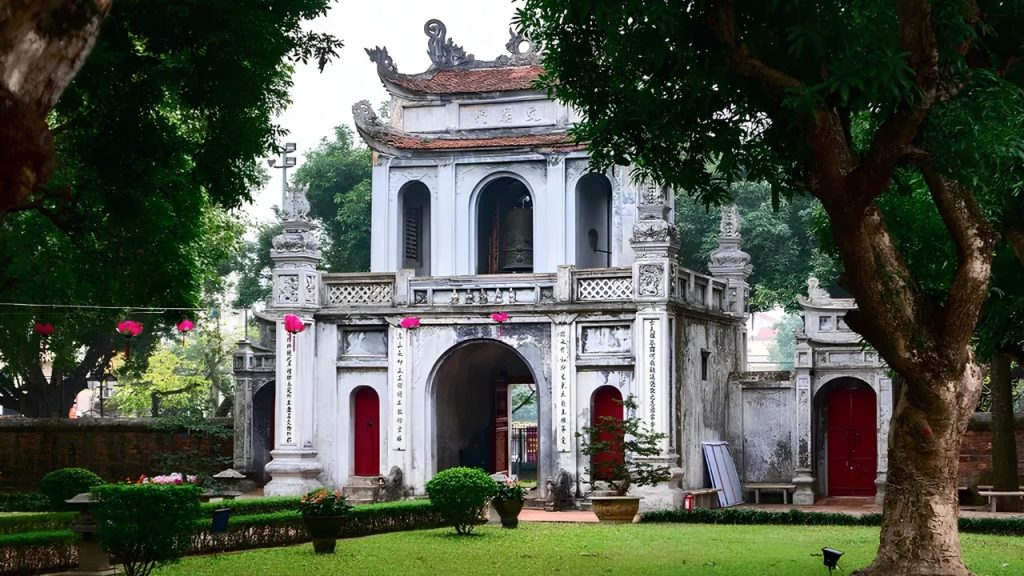
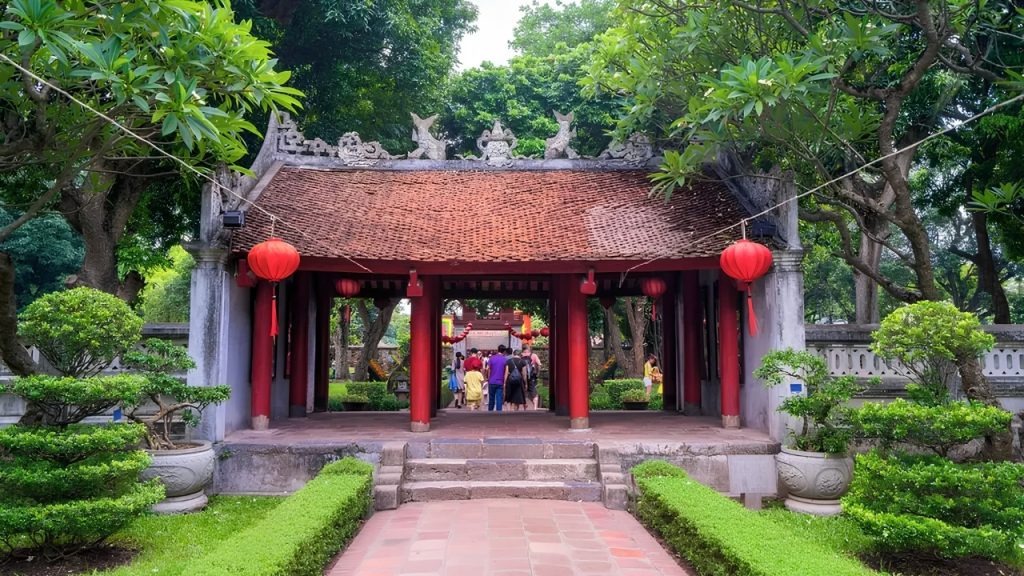
Right after stepping through the main gate Van Mieu Mon, you will encounter the refreshing atmosphere of ancient shade trees. Moving further inward is the Dai Trung Gate featuring a 3-bay architecture roofed with ancient tiles, flanked by two smaller gates named Thanh Duc Mon (Cultivating Virtue Gate) and Dat Tai Mon (Achieving Talent Gate), symbolizing the development of both moral virtue and capability.
Van Mieu Mon and Dai Trung Gate within the relic area (Source: Internet)
Zone Two: Khue Van Pavilion - Cultural Symbol of the Capital
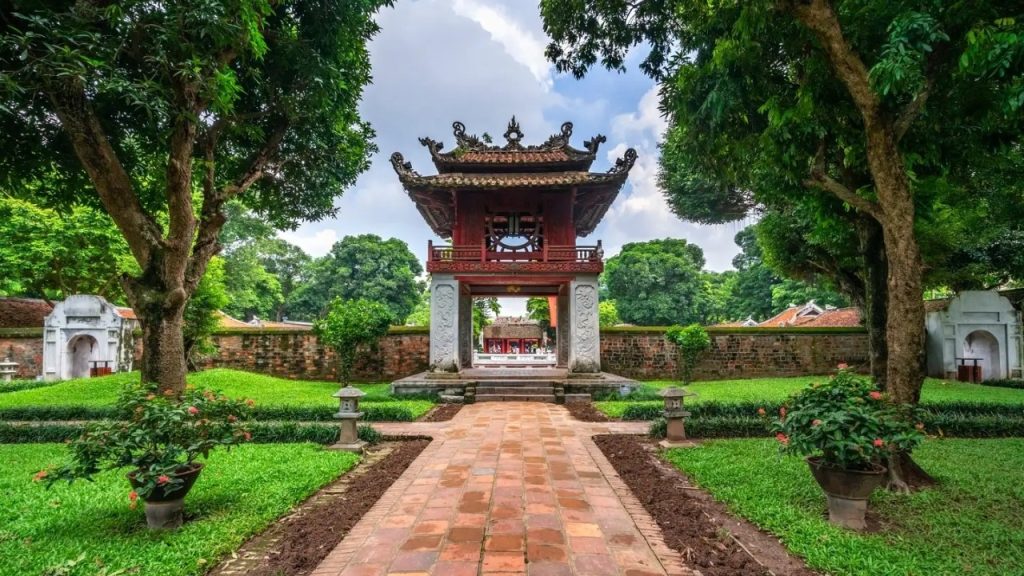
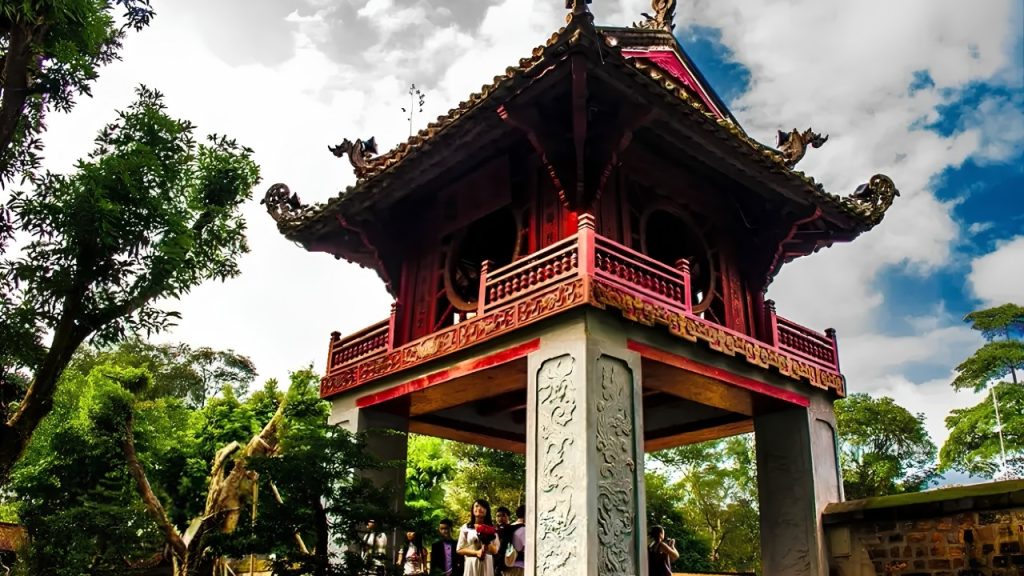
Passing through Dai Trung Gate, visitors arrive at Khue Van Pavilion (Pavilion of the Constellation of Letters). Built in 1805 under the Nguyen Dynasty, this two-tier square pavilion features 8 roofs, with round wooden-framed windows radiating outward like starlight from the Khue constellation. This is a unique architectural masterpiece chosen as the official symbol of Vietnam's capital, Hanoi.
Khue Van Pavilion – cultural symbol of Hanoi (Source: Internet)
Zone Three: Thien Quang Well and the 82 Doctor Stelae
Beyond Khue Van Pavilion lies the tranquil square Thien Quang Well (Well of Heavenly Clarity). Flanking the well are two rows of structures housing the 82 Doctor Stelae resting on stone tortoises. Each stele is an exquisite sculpture masterpiece engraving the names and hometowns of 1,304 Doctors from imperial examinations during the Le - Mac dynasties.
Thien Quang Well and the 82 Doctor Stelae at the Temple of Literature (Source: Internet)
Zone Four: Dai Thanh Gate and Dai Thanh Sanctuary
The most solemn sanctum of the relic is the Dai Thanh Sanctuary, housing altars dedicated to Confucius and the Seventy-Two Sages. Stepping through the wide Dai Thanh Gate, a flat Bat Trang brick courtyard opens up, leading into the ancient, incense-perfumed Front Ceremonial Hall (Bai Duong) and Rear Sanctuary (Hau Duong).
Dai Thanh Gate and Dai Thanh Sanctuary at the Temple of Literature - Quoc Tu Giam (Source: Internet)
Zone Five: Thai Hoc Zone
Located at the very back of the relic, the Thai Hoc Zone was formerly Quoc Tu Giam - the national university training talented scholars. Destroyed by war, the complex was reconstructed to its current scale in 1999. Today, the Thai Hoc House honors founding monarchs (Ly Thanh Tong, Ly Nhan Tong, Le Thanh Tong) and Scholar Chu Van An, while serving as a hub for cultural events and major seminars.
Thai Hoc Zone and ancient educational space at the Temple of Literature (Source: Internet)
Engaging Activities When Visiting the Temple of Literature - Quoc Tu Giam
Experiencing Heritage Spaces and Exploring the History of Scholarly Daoism
Rather than simply walking around and taking photos, you can treat your visit as a journey to learn about Vietnam's educational history.
Some notable contents include:
Discovering the establishment process of the Temple of Literature and Quoc Tu Giam.
Observing the architecture of Khue Van Pavilion, Dai Thanh Gate, and Dai Thanh Sanctuary.
Learning about the Doctor stelae system and ancient examination systems.
Visiting the Thai Hoc zone and spaces introducing educational history.
Exploring decorative sacred animals on ancient architectural structures.
Participating in heritage educational programs for students, including exploring Doctor stelae, Khue Van Pavilion, and traditional classrooms.
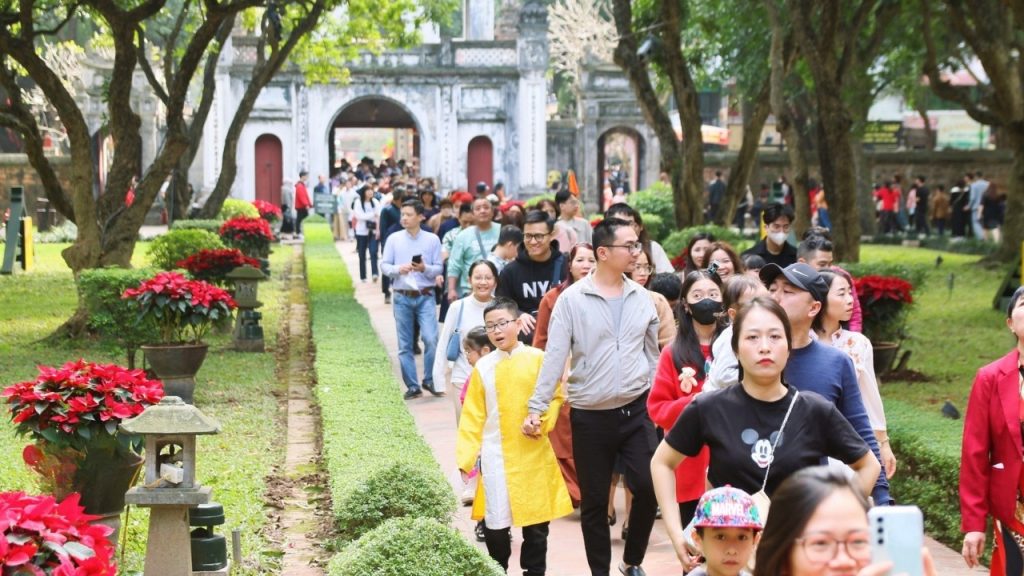
This sightseeing approach is particularly suited for families with children or those wishing to understand the stories behind each structure rather than treating the Temple of Literature merely as a check-in spot.
Visitors exploring heritage spaces and scholarly history (Source: Internet)
Participating in Cultural Events, Requesting Calligraphy in Early Spring, and Praying for Good Luck Before Exams
Every Lunar New Year spring season, the Spring Calligraphy Festival at Van Lake attracts tens of thousands of visitors seeking calligraphy wishes for peace and academic success. Additionally, before major exams, numerous scholars and parents flock here to offer incense and pray for good fortune in their academic pursuits.
Calligraphy requesting activity at the Temple of Literature - Quoc Tu Giam (Source: Internet)
Experiencing the "Quintessence of Scholarly Daoism" Night Tour with 3D Mapping Technology
As a fresh and modern highlight of the Temple of Literature - Quoc Tu Giam, the night tour utilizes modern lighting, sound, and 3D Mapping projection technology. Visitors are immersed in an emotional story of scholarly traditions, virtual reality interactions, traditional music performances, and delightful chats with the "AI Turtle Elder".
Quintessence of Scholarly Daoism night tour with 3D Mapping technology at the Temple of Literature (Source: Internet)
Check-in Photography and Purchasing Unique Souvenirs
Ancient architecture paired with traditional ao dai offers a perfect combination for visitors to capture stunning photos. The souvenir shop at Thai Hoc House also provides various culturally rich gifts such as Doctor stele bookmarks, miniature calligraphy, wooden notebooks, Khue Van Pavilion models…
Visitors taking photos and buying souvenirs at the Temple of Literature (Source: Internet)
Important Notes When Visiting the Temple of Literature - Quoc Tu Giam
Attire and Visiting Etiquette
Attire: The Temple of Literature is a solemn cultural space; visitors need to dress politely and modestly (no excessively short skirts, tank tops, or shorts above the knee).
Etiquette: Walk softly, speak quietly, avoid pushing or shoving, maintain general cleanliness, and do not litter indiscriminately.
Protecting Heritage Artifacts
The 82 Doctor stelae and architectural works within the relic possess exceptional value. Strictly DO NOT touch the tortoises' heads, nor write or draw on the Doctor stelae or artifacts.
Do not climb or cross protective barriers at Thien Quang Well and sanctuary rooms.
Notes when visiting the Temple of Literature - Quoc Tu Giam relic (Source: Internet)
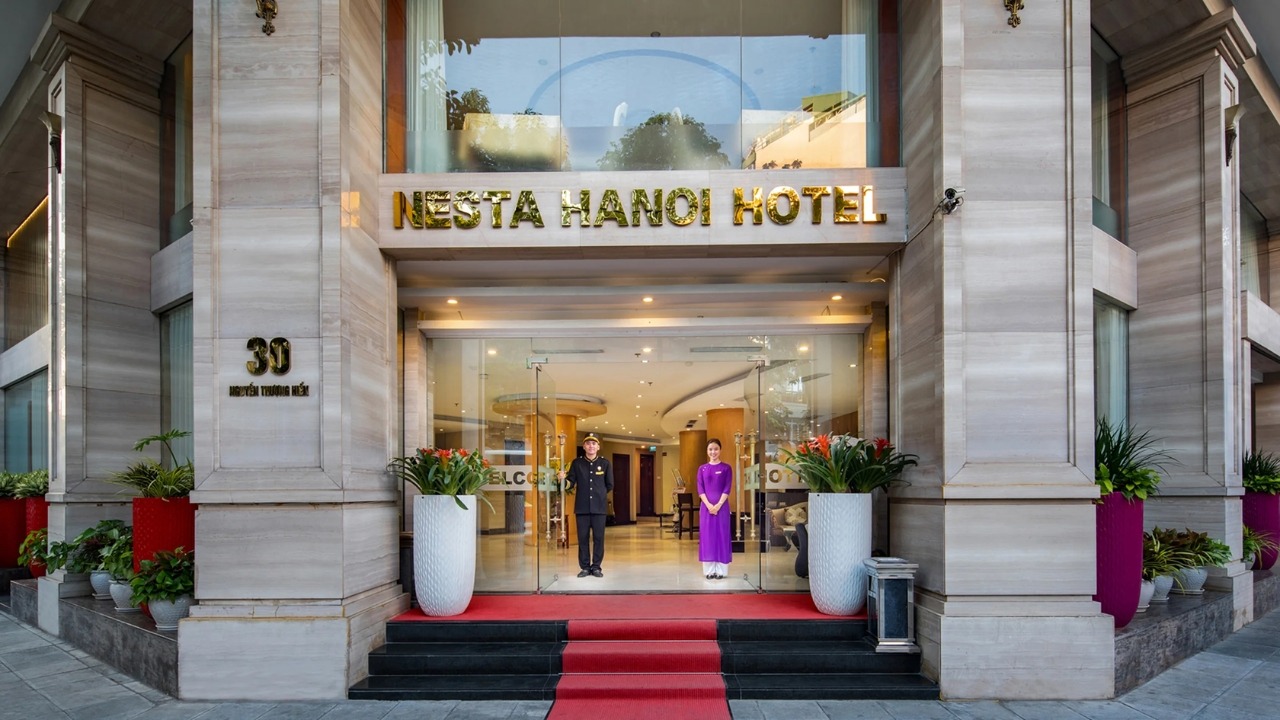
Suggested Resort Hotel Near the Temple of Literature - Quoc Tu Giam: Nesta Hotel & Spa (83 Hao Nam)
Following a journey of exploring historical heritage, choosing a resting retreat that meets criteria such as a convenient location, healing atmosphere, and standard service is a top priority for many travelers. Nesta Hotel & Spa (83 Hao Nam) under the Nesta Hotel Group system is the perfect choice located just about 1.2km from the Temple of Literature - Quoc Tu Giam.
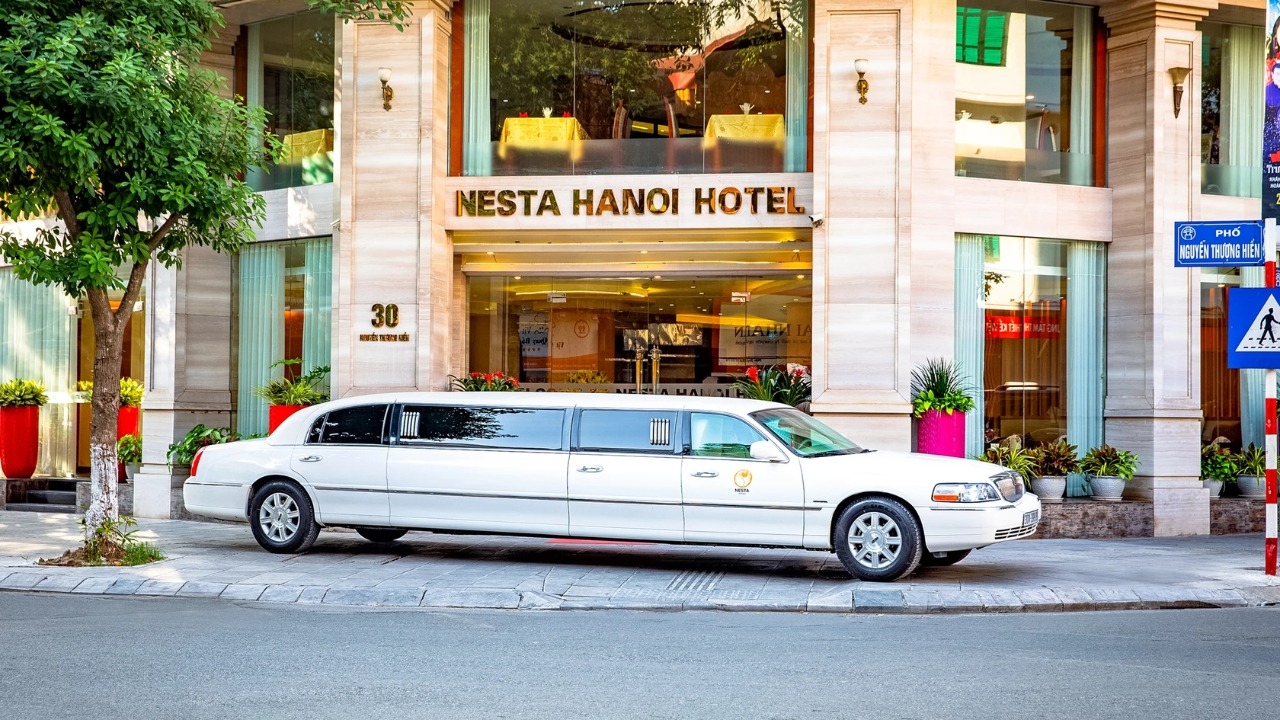
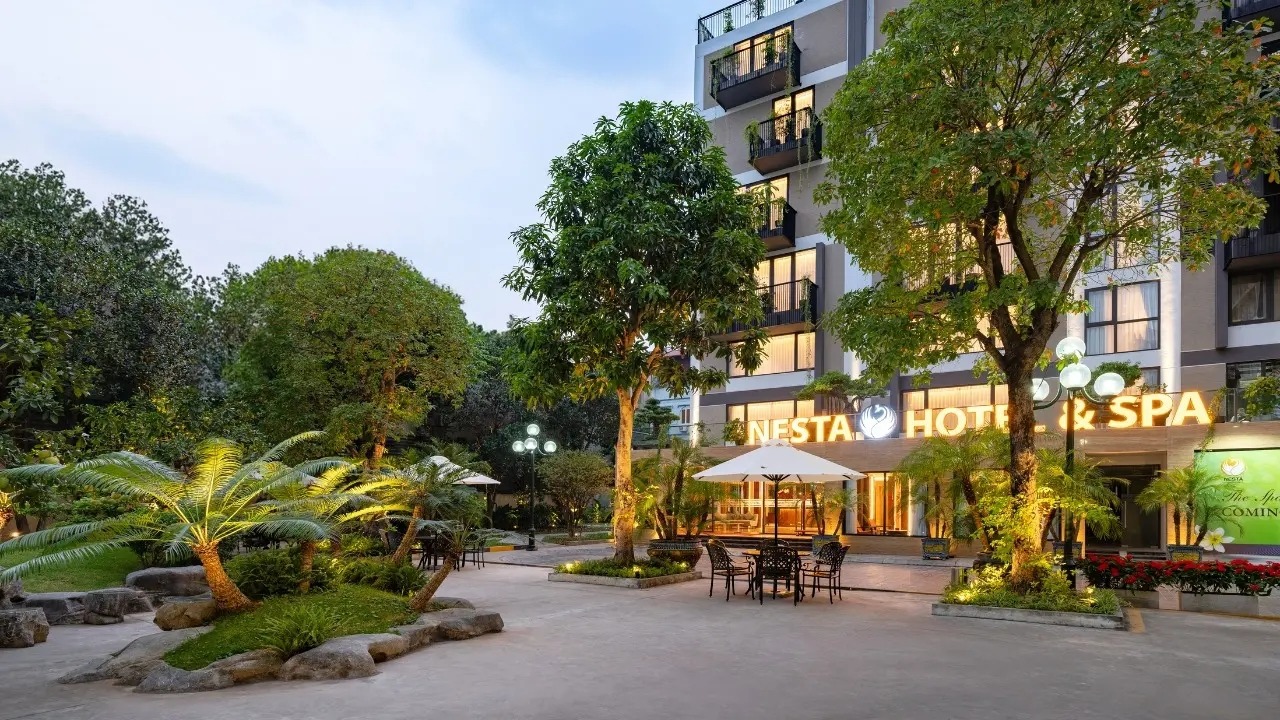
Nesta Hotel & Spa 83 Hao Nam – hotel near the Temple of Literature - Quoc Tu Giam
Highlights and USPs of Nesta Hotel & Spa (83 Hao Nam):
Prime Connecting Location: Situated at 83 Hao Nam, O Cho Dua ward, Dong Da district. The hotel is only 1.2km from the Temple of Literature - Quoc Tu Giam, close to the Cat Linh - Ha Dong elevated metro station (just hundreds of meters away), enabling travelers to easily travel to the Thang Long Imperial Citadel, Ho Chi Minh Mausoleum, Hoa Lo Prison...
Comfortable Living Space: Nesta Hotel & Spa targets a comfortable resting experience suitable for both leisure and business travelers. Room spaces are equipped with necessary amenities for short or extended stays.
Diverse Room Systems: The hotel features multiple room choices catering to diverse needs ranging from solo travelers, couples, to families. Depending on room categories, visitors can select spaces matching their preferences for area and amenities.
Spa & Massage Services: After hours of walking to sightsee heritage spots and central Hanoi areas, visitors can utilize the hotel's spa services to unwind and recharge energy.
Restaurant and Breakfast Buffet: Staying guests can dine at the hotel's restaurant, featuring a breakfast buffet, facilitating convenient scheduling for sightseeing itineraries right from the start of the day.
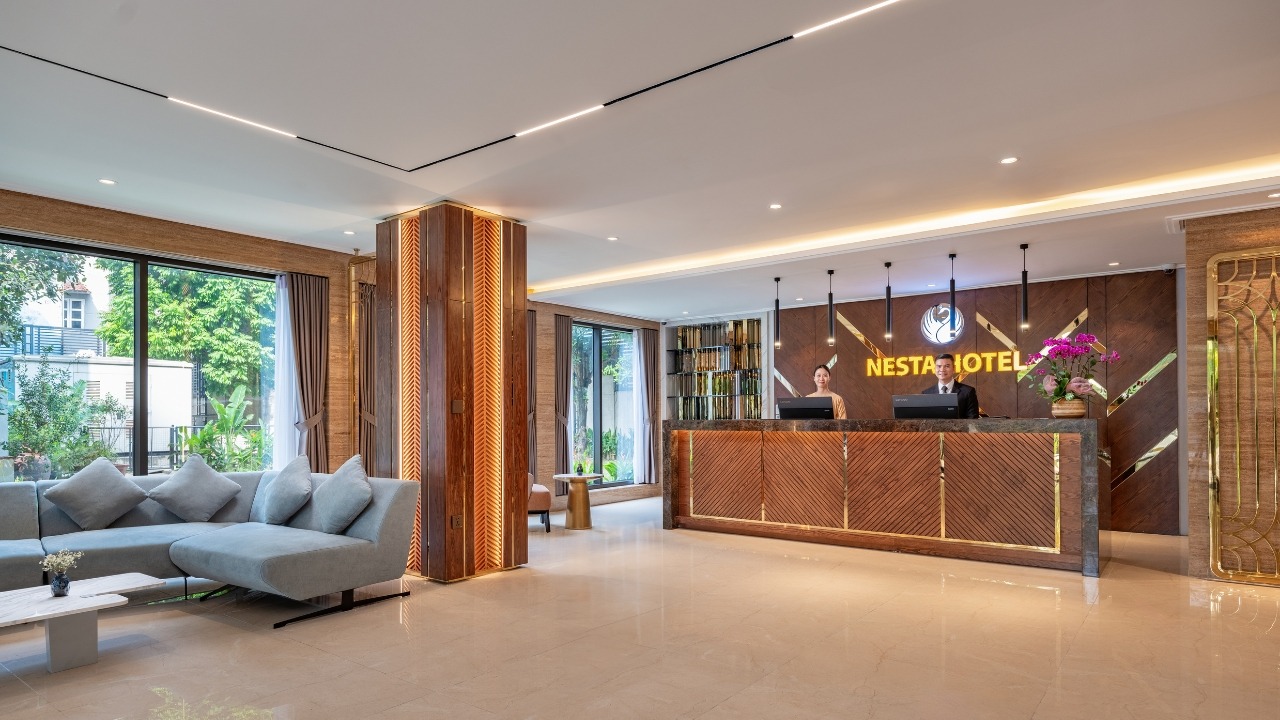
Guest Support Services: Front desk operates 24/7, along with utilities such as luggage storage assistance and airport shuttle services, suited for trips with arrival or departure schedules at varying times.
Room Amenities: Rooms are equipped with high-speed Wi-Fi, Smart TV, safe boxes, and private bathrooms, meeting requirements for rest, work, and entertainment during your stay.
Comfortable and well-equipped bedroom space at Nesta Hotel & Spa 83 Hao Nam
Contact Information for Booking Nesta Hotel & Spa (83 Hao Nam):
How Long Does It Take to Visit the Temple of Literature - Quoc Tu Giam?
Average visiting duration ranges from 1.5 to 2 hours for daytime tours so you can cover all 5 architectural zones, take photos, and read historical information. For the "Quintessence of Scholarly Daoism" Night Tour, the experiential program lasts about 90 minutes.
What Transport Should I Use to Travel from Nesta Hotel & Spa to the Temple of Literature?
The distance between the two points is only about 1.2 km, extremely convenient for travel:
Taxi/Grab: This is a convenient option if traveling with family, carrying luggage, or wishing to save travel time. Notably, staying guests at Nesta enjoy a 20% discount on Grab services when traveling to and from the hotel, making trips more convenient and further optimizing costs.
Elevated Metro (Cat Linh Line): You can walk from the hotel to La Thanh/Cat Linh station to experience the modern metro line.
Walking: If you love Hanoi's atmosphere, it takes only about 15 minutes of leisurely walking through Ton Duc Thang - Nguyen Thai Học streets to arrive.







 Book now
